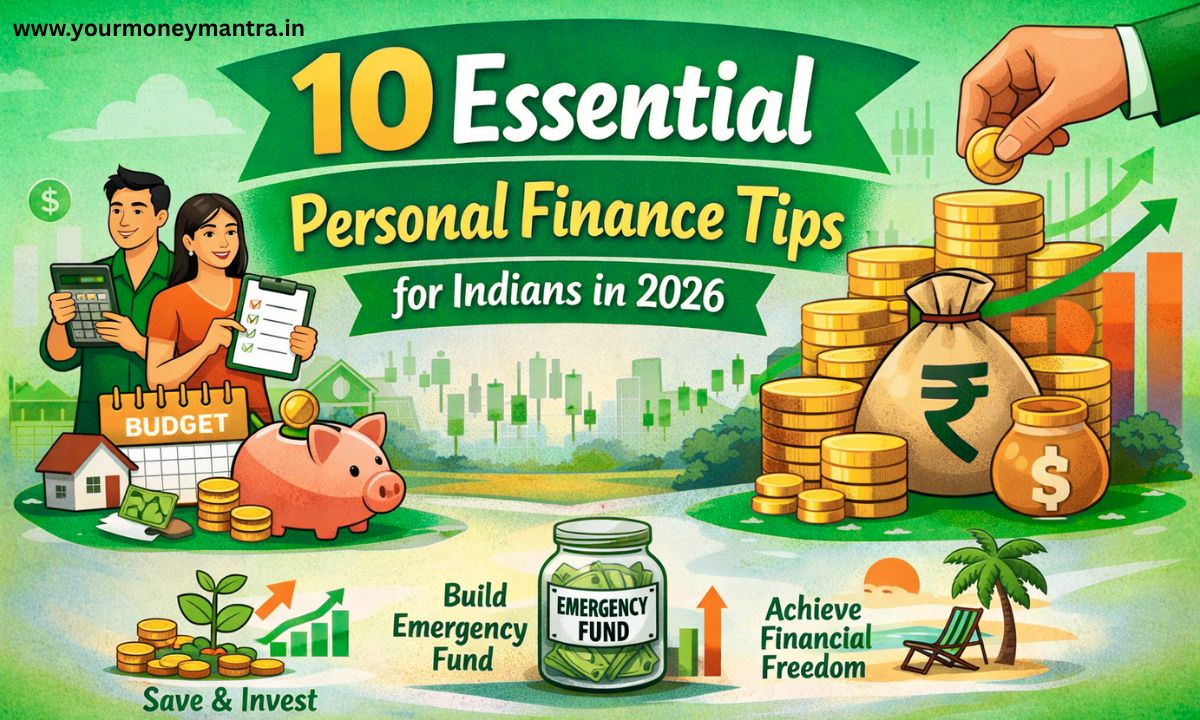
Personal finance is not complicated. It is about building simple habits and following them consistently over time. In this detailed guide, we will discuss 10 essential personal finance tips every Indian should follow in 2026 to build long-term wealth, avoid financial stress, and secure their future.
In 2026, the Indian economy is witnessing a “Goldilocks” phase—a sweet spot where growth is robust (around 7% GDP), and inflation has cooled significantly (averaging near 2–3%). While this sounds like a dream for your wallet, it actually requires a major shift in how you handle your money. The old strategies of just “parking cash in a bank” or “buying gold when it dips” aren’t enough in an era of rapid digital transformation and evolving tax laws.
Many people in India are earning more than before, yet they struggle financially. The main reason is not low income — it is poor money management.
Here are the 10 essential personal finance tips every Indian must follow to master their money.
1. Create a Monthly Budget and Control Your Cash Flow
Budgeting is the foundation of financial success. If you don’t know where your money is going, you will never be able to save or invest effectively.
Most people think they don’t spend much, but when they actually track their expenses, they are surprised. Small daily expenses like food delivery, online shopping, subscriptions, and impulse purchases quietly consume a large portion of income.

Why Budgeting Is Critical in 2026
In 2026, budgeting is no longer just a good financial habit — it is a necessity. The financial environment in India is changing rapidly. Rising prices, easy access to digital spending tools, increasing lifestyle expectations, and the normalization of EMIs have made it easier than ever to lose control of money.
Let’s understand in detail why budgeting has become more important than ever.
a. Cost of Living Is Increasing Every Year
One of the biggest financial realities in 2026 is inflation. The cost of necessities — groceries, rent, fuel, electricity, school fees, and healthcare — continues to rise year after year. Even if inflation is officially around 5–6%, in practice, many essential expenses are increasing at a much higher rate.
b. Digital Payments Make Spending Easier (and More Dangerous)
India has become one of the most digitally advanced payment economies in the world. With UPI, credit cards, net banking, auto-debit subscriptions, and one-click checkouts, spending money has never been easier.But convenience has a hidden downside — it reduces the psychological pain of spending.
When you pay cash:
- You physically see money leaving your hand.
- You feel the impact of spending.
When you pay digitally:
- Money leaves invisibly.
- You don’t feel the immediate loss.
- You spend faster and more frequently.
Small transactions of ₹199, ₹299, ₹499 may seem harmless. But over a month, they can add up to thousands.
c. Lifestyle Inflation Is Rising Rapidly
Lifestyle inflation happens when your expenses increase as your income increases. When you get a salary hike, bonus, or promotion, your instinct is to upgrade your lifestyle:
- Bigger house
- Better car
- More dining out
- International vacations
- Expensive gadgets
There is nothing wrong with improving your lifestyle. The problem begins when expenses grow at the same pace as income — or faster. Many young professionals in India are earning well, yet saving very little. Why? Because:
- They upgrade phones every year.
- They finance cars through long EMIs.
- They move to higher-rent apartments.
- They spend more on social status.
Over time, a higher standard of living becomes a financial obligation rather than a choice.
d. EMI Culture Is Growing Rapidly
EMIs (Equated Monthly Installments) have become a normal part of Indian financial life. Today, you can buy almost anything on EMI:
- Smartphones
- Furniture
- Travel packages
- Electronics
- Cars
- Even groceries in some cases
While EMI makes purchases affordable in the short term, it creates long-term financial commitments. The danger of EMI culture:
- Multiple small EMIs accumulate.
- You forget total outstanding obligations.
- A large portion of your salary goes toward repayments.
- Financial flexibility is reduced.
For example:
- Phone EMI: ₹2,000
- Laptop EMI: ₹3,000
- Personal loan EMI: ₹8,000
- Car EMI: ₹12,000
Individually, these may seem manageable. Combined, they may consume 40–50% of your income.
How to Create a Simple Budget (Step-by-Step Guide)
Many people believe budgeting is complicated or time-consuming. In reality, a simple budget is enough to take control of your finances. The goal of budgeting is not to restrict your spending, but to make sure your money is being used for the things that truly matter to you.
One of the easiest and most practical ways to create a budget is the 50–30–20 rule. In the context of 2026—where UPI makes spending invisible and “subscription fatigue” is real—mastering the 50–30–20 rule is your best defense against living paycheck to paycheck.
The 50–30–20 Rule Explained. This rule is the “Goldilocks” of budgeting: it’s simple enough to follow but robust enough to build real wealth.
1. The 50%: Needs (The “Must-Haves”)
These are the non-negotiables. If you stopped paying these, your quality of life would take a massive hit.
- What’s included: Rent/Home Loan EMIs, groceries, electricity and water bills, basic internet, insurance premiums, and minimum credit card payments.
- 2026 Reality Check: With rising urban rents in cities like Bengaluru, Mumbai, or Delhi, this category is the hardest to keep under 50%. If yours is higher, you may need to “steal” from the 30% (Wants) category to balance it out.
2. The 30%: Wants (The “Lifestyle” Fund)
This is where your money goes for living, not just surviving.
- What’s included: Dining out, OTT subscriptions (Netflix, Prime), gym memberships, latest gadgets, and weekend trips.
- The Trap: In the age of 10-minute delivery apps (Zepto/Blinkit), “wants” often masquerade as “needs.” Ask yourself: Do I need this artisanal coffee, or do I just want it?
3. The 20%: Savings & Investments (The “Future You” Fund)
This is the most important slice. This money doesn’t leave your ecosystem; it grows within it.
- What’s included: Emergency fund contributions, SIPs in Mutual Funds, PPF, and extra debt repayments (paying off a loan faster).
- The Golden Rule: Always pay this 20% to yourself first, as soon as your salary hits. Don’t wait to see what’s left at the end of the month.
Practical Steps to Build Your Budget
Step 1: The “Audit” Phase (Track for 2–3 Months)
You cannot manage what you do not measure. For 60 days, record every single rupee that leaves your account.
- Tool Tip: Use your banking app’s “Spend Analyzer” or a simple spreadsheet.
- Note: Don’t forget the small ₹20-30 UPI payments for chai or snacks; these “leaks” often add up to thousands by month-end.
Step 2: The “Trim” Phase (Identify Unnecessary Spending)
Review your audit. Look for “Zombie Subscriptions”—apps you signed up for a year ago and haven’t opened in months.
-
The 48-Hour Rule: For any “Want” over ₹2,000, wait 48 hours before hitting ‘Buy.’ Often, the impulse fades, and you save the money.
Step 3: The “Boundary” Phase (Set Category Limits)
Once you know your average spend, set hard limits.
- Example: “I will not spend more than ₹6,000 on dining out this month.”
- The Envelope Method (Digital): Use a secondary bank account for “Wants.” Transfer your 30% there at the start of the month. When that account hits zero, the fun stops until next month.
Step 4: The “Evolution” Phase (Monthly Review)
Life changes. One month, you might have a wedding to attend (increasing your 30%), or your rent might go up.
-
Action: Spend 15 minutes on the last Sunday of every month reviewing your progress. Did you hit your 20% savings goal? If not, why?
2. Build a Strong Emergency Fund
An emergency fund is one of the most important parts of personal finance. Think of it as your financial safety net. Life does not always go according to plan. You may suddenly lose your job, face a medical emergency, or need urgent repairs for your home or vehicle. These situations can happen without warning, and when they do, they often require immediate money.
If you do not have savings set aside for such situations, you may feel stressed and helpless. Many people in this situation turn to credit cards or personal loans. While borrowing may solve the problem temporarily, it usually creates a new one — high-interest debt. Credit card interest rates can be very high, and personal loans come with EMIs that reduce your future income. Instead of focusing on solving the emergency, you end up worrying about repayments. This is why building a strong emergency fund is so important.
How Much Emergency Fund Should You Have?
As a general rule, you should have at least six months of essential expenses saved. Essential expenses include things like:
- Rent or home loan EMI
- Groceries
- Electricity and utility bills
- School fees
- Insurance premiums
- Basic transportation
For example, if your essential monthly expenses are ₹25,000, you should aim for an emergency fund of at least ₹1,50,000.
If your job is unstable, you work on commission, or you are self-employed, it is safer to keep nine to twelve months of expenses saved. This gives you extra protection in case your income stops for a longer time.
Where Should You Keep Your Emergency Fund?
Your emergency fund should be easy to access. This money is not meant to earn high returns. Its purpose is safety and liquidity. You can keep it in:
- A regular savings account
- Liquid mutual funds
- Short-term fixed deposits
These options allow you to withdraw money quickly when needed.
Avoid investing this money in stocks, equity mutual funds, or long-term investments. The stock market can fluctuate, and you may not be able to withdraw the money immediately without losses. In an emergency, quick access is more important than high returns.
How to Build It Gradually
Building six months of expenses may seem overwhelming at first. The key is to start small and stay consistent.
First, aim to save one month of essential expenses. Once you reach that goal, increase it to two months, then three, and continue step by step. You can set up an automatic transfer every month to your emergency fund account. Even small amounts saved regularly will grow over time. An emergency fund does more than just provide money. It gives you confidence. It reduces fear and stress during difficult times. Knowing that you have a financial backup allows you to handle problems calmly and make better decisions.
In simple words, an emergency fund is not optional — it is a basic requirement for financial security and peace of mind.
3. Start Investing Early to Benefit from Compounding
One of the biggest mistakes people make is delaying investments. Many think they should start investing only when their income increases. However, the most powerful factor in wealth creation is time, not the amount.
What is compounding?
Compounding means earning returns on your returns. Over time, this creates exponential growth.
For example:
If you invest ₹5,000 monthly at 12% return:
- Starting at age 25 → you may accumulate over ₹1 crore by retirement
- Starting at age 35 → the final amount may be almost half
Where beginners should start
- SIP in equity mutual funds
- Index funds
- PPF for long-term stability
- NPS for retirement
Tips for beginners
- Start small, but start early
- Invest regularly, not occasionally
- Avoid trying to time the market
The earlier you start, the less money you need to invest to reach your goals.
4. Invest Smartly to Beat Inflation
Saving money in a bank account is safe, but it does not help you grow wealth. Inflation reduces the purchasing power of your money every year.
If inflation is 6% and your savings earn 3%, your money is actually losing value.
Smart investment strategy
For long-term goals:
- Equity mutual funds
- Index funds
- Hybrid funds
For stability:
- Debt funds
- Fixed deposits
- PPF
Diversification is important
Do not put all your money in one place. A balanced portfolio may include:
- Equity (growth)
- Debt (stability)
- Gold (protection)
Diversification reduces risk and improves long-term returns.To know more about mutual funds, you can read this:
What is Mutual Fund and How it works? Types, Benefits & Taxation [2026 Guide]
5. Protect Your Finances with Health and Term Insurance
Insurance is one of the most important points in personal finance tips. It is one of the most ignored aspects of personal finance in India. Many people buy insurance late or depend only on employer coverage.
Health insurance
Medical costs in India are rising rapidly. A single hospitalization can wipe out your savings. You should have:
- Minimum ₹5–10 lakh coverage
- Family floater if you have dependents
- A personal policy, even if you have employer insurance
Term insurance
If your family depends on your income, term insurance is essential.
Coverage rule:
- 10–15 times your annual income
Always choose a pure term plan, not investment-linked policies. Insurance ensures that your financial goals remain protected even during unexpected events.
6. Manage Debt Carefully and Avoid High-Interest Loans
Debt can help you achieve goals, but too much debt can destroy your financial stability.
Types of debt
Good debt:
- Home loan
- Education loan
Bad debt:
- Credit card outstanding
- Personal loans for lifestyle
- Buy Now Pay Later misuse
Smart debt rules
- Total EMI should not exceed 30–40% of income
- Always pay credit card bills in full
- Avoid unnecessary loans
How to become debt-free faster
- Pay high-interest loans first
- Increase EMI when possible
- Avoid taking new loans
Being debt-free gives you financial freedom and peace of mind.
7. Maintain a Good CIBIL Score

Your CIBIL score affects your ability to get loans and credit cards. A score above 750 helps you:
- Get loans at lower interest rates
- Receive faster approvals
- Save money over time
How to improve your score
- Pay EMIs and credit card bills on time
- Keep credit utilization below 30%
- Avoid multiple loan applications
- Maintain a long credit history
A good credit score is an important financial asset.
8. Plan Your Taxes in Advance
Tax planning should be done throughout the year, not at the last minute.
Common tax-saving investments
- ELSS mutual funds
- PPF
- NPS
- Health insurance (Section 80D)
- Term insurance
New vs Old Tax Regime
Choose based on:
- Your deductions
- Investment habits
- Income level
Smart tax planning helps you save money while building long-term wealth.
9. Create Multiple Sources of Income
Depending on a single income source is risky in today’s uncertain environment.
Why multiple income streams matter
- Job security is decreasing
- Inflation is rising
- Extra income accelerates wealth creation
Popular options in India
- Freelancing
- Blogging or content creation
- YouTube
- Online courses
- Dividend investing
- Rental income
Even a small side income increases financial confidence.
10. Set Financial Goals and Review Them Regularly
Without clear goals, saving and investing become directionless.
Types of goals
Short-term (1–3 years):
- Emergency fund
- Vacation
- Gadget purchase
Medium-term (3–7 years):
- Car
- House down payment
Long-term (10+ years):
- Child education
- Retirement
How to manage goals
- Assign a timeline
- Calculate the required investment
- Review every 6 months
Goal-based investing keeps you disciplined and focused.
Conclusion
Personal finance is not about complicated formulas or secret strategies. It is about building simple habits and following them consistently. In 2026, India is growing fast, incomes are rising, and digital payments have made spending easier than ever. But along with opportunities, there are also risks — rising lifestyle costs, easy EMIs, and financial distractions.
If you want financial freedom, you must take control of your money instead of letting money control you.
Start with the basics. Create a monthly budget so you know exactly where your money is going. Build an emergency fund so unexpected problems do not push you into debt. Start investing early so compounding can work in your favor. Invest smartly to beat inflation. Protect yourself with proper health and term insurance. Manage debt carefully and avoid high-interest loans. Maintain a strong CIBIL score. Plan your taxes wisely. Create multiple income sources. And most importantly, set clear financial goals and review them regularly.
None of these steps requires a very high income. They require discipline, awareness, and consistency.
Remember, wealth is not built overnight. It is built month by month, decision by decision. Small actions — like saving 20% of your income, avoiding unnecessary EMIs, or starting a SIP — may not look powerful today. But over 10–20 years, they can completely change your financial future.
In simple words, financial success is not about earning more. It is about managing what you earn wisely.
If you follow these 10 habits consistently in 2026 and beyond, you will reduce financial stress, build long-term wealth, and create a secure future for yourself and your family.
Your money journey does not need to be perfect — it just needs to be consistent.